
Love What’s On Your Plate: Finding Joy in Seasonal Cooking with Stephanie Valentine
In Episode 140 of the Kitchen Confidante Podcast, Liren Baker talks with Stephanie Valentine about her latest cookbook, Love What’s On Your Plate, and the nutritional wisdom woven throughout its pages.
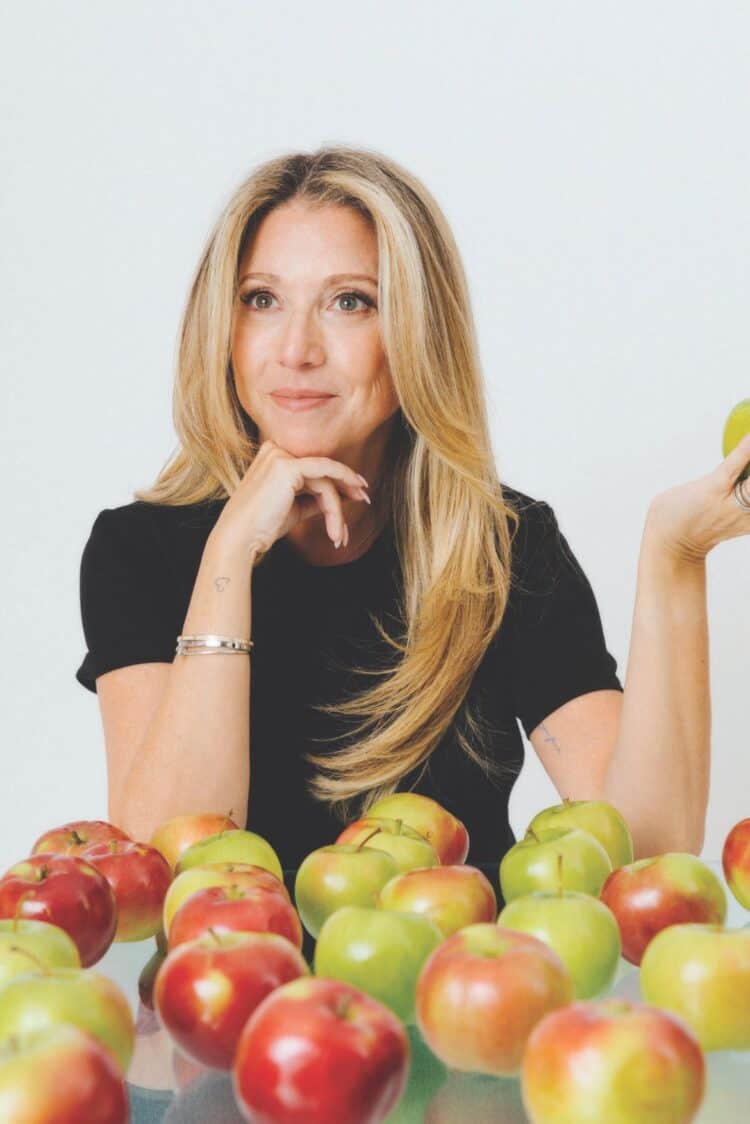
On the podcast, I recently chatted with Stephanie Valentine, nutritionist, recipe developer, and the author of Love What’s On Your Plate: Finding Joy in Seasonal Cooking. Her cookbook celebrates seasonal cooking, simple ingredients, and the connection between nourishing ourselves and the people we gather around our table. Filled with approachable recipes, practical nutritional tips, gardening advice, and stories rooted in family tradition, this book encourages us to embrace good food with both confidence and curiosity.
When we think about eating well, it is easy to get caught up in rules, trends, and the latest nutrition advice — but today’s guest reminds us that good food isn’t about restriction — it’s about finding joy in what’s on our plate.
In this episode, we talk about the inspiration behind her book, why growing even just a few herbs can change the way you cook, and the nutritional wisdom woven throughout its pages. Whether you’re looking for fresh seasonal inspiration or simply a reminder that healthy eating can be both delicious and deeply satisfying, you’ll love this conversation.
Listen to the full episode or keep reading for some of the highlights from our conversation.
How Did You Get Started Cooking?
The first dish I ever cooked for other people was the fresh tomato pasta recipe in my book. I was at university when someone made a giant bowl of pasta for a bunch of us students. It tasted so gourmet but took almost no time at all, so I asked for the recipe right away.
My path into nutrition and recipe development came later. I’m a holistic nutritionist, a clinical hypnotist, a mental health wellness coach, and a certified culinary nutritionist. It started when my kids were in elementary school. I had time on my hands; I was dealing with some digestive issues, and I was having a bit of an identity crisis as a stay-at-home mom while the kids were away all day. My mom told me I needed to find some purpose, so I enrolled in nutrition school. I didn’t fully know what holistic nutrition was at the time, but it sounded interesting and set me on the path to everything that followed.
Last year I took a nutrition course through Harvard Medical School. I was curious to see what had changed since I graduated and how Harvard’s approach compared to what I’d learned in holistic nutrition. They were teaching very familiar things, but what struck me most was Harvard’s six pillars of lifestyle medicine: nutrition, sleep, exercise, community, avoiding harmful substances, and stress management. When I saw that list, I realized it’s exactly what I’ve been teaching all along.
Tell Us More About Your Book, Love What’s On Your Plate
When my kids were in university, I typed up every recipe I’d made for them growing up and sent them off with a binder to get them started. Those recipes were the early seeds for this book.
I had a clear vision for the book to be more than just recipes. I wanted it to be a beautiful coffee table book. I’ve only ever cooked recipes from books with photos of the dish, so images were non-negotiable for me. I put everything I had into it.
Beyond recipes, the book weaves in practical guidance, such as beginner gardening advice, how to set a proper table, and a Passover seder guide.
If there’s one thing I hope readers take away, it’s that they can garden wherever they are. You don’t need a big yard. Windowsills and pots work beautifully. There’s nothing like clipping your own herbs and smelling how fresh they are, and I want everyone to experience that joy.
When my kids were little, I’d bring them into the garden with me. I remember my daughter helping me pick tomatoes, her cheeks stuffed like a squirrel, and the basket nearly empty by the time we came inside.
“That’s when I realized I never had to convince my kids to eat vegetables — they just had to be part of the process, and the food had to taste good straight from the ground.”
Throughout the book, I also include nutrition insights. This includes things like how to get the most nutrition from your food, through knowledge such as understanding complete proteins and fat-soluble nutrients. I also always frame healthy eating in the context of stress — if meal planning or food tracking is stressful for you, that stress can undo the benefits of the food itself. The simplest path to nutrient-dense eating is choosing foods that look the way nature made them. There’s no nutrition label on a vegetable. And when you eat in season, everything tastes better, the quality is higher, and your enjoyment of the whole experience goes up.
“So many of us say our plates are too full. The idea was learning to love everything on that metaphorical plate, even the things we didn’t ask for. It’s about resilience.”
Stephanie Valentine
The phrase “love what’s on your plate” predates this cookbook and connects back to my wellness practice. The phrase is etched into the countertop in my kitchen, and my husband made me plates with it written on them. It’s become my catchphrase.
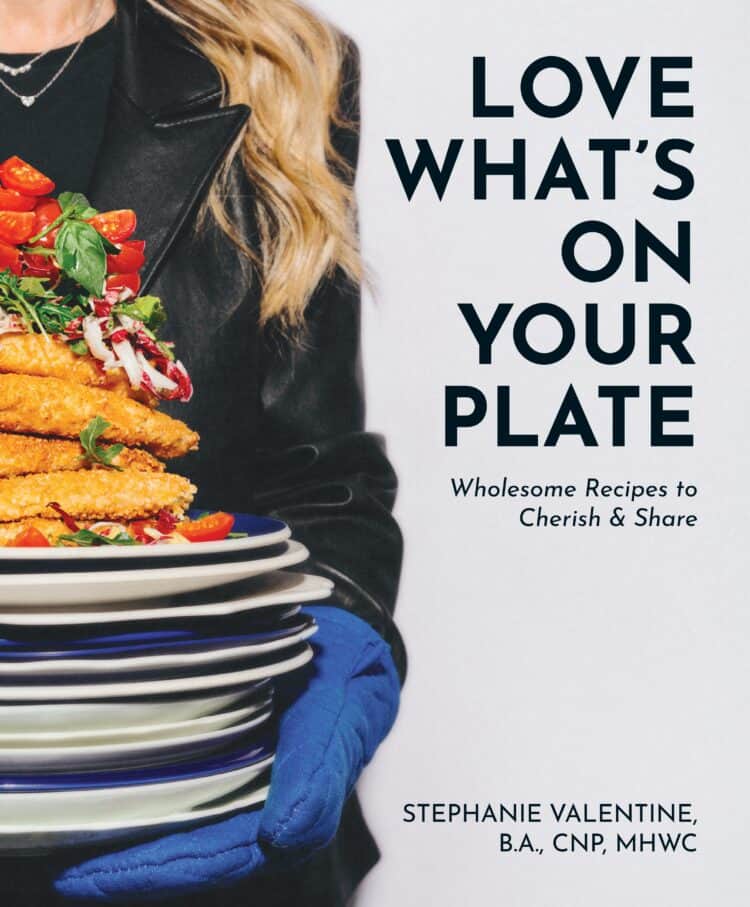
Love What’s On Your Plate, by Stephanie Valentine (RECIPE::BOOKS Publishing, 2025).
Learn more
Listen to the full podcast episode with Stephanie. You can learn more on her website, svliving.com and follow her on Instagram @s.v.living.
Related posts
In Good Health: How Rachel Riggs Learned to Cook for a Nourished Life
Comments
COOKBOOK











Stephanie Valentine’s focus on seasonal cooking and the nutritional wisdom woven into her new cookbook sounds like a refreshing way to make healthy meals feel joyful rather than restrictive. I’m especially interested in hearing how the podcast conversation brings those ideas to life.
I love the idea of weaving nutritional wisdom into the joy of seasonal cooking rather than treating healthy eating as restrictive. Episode 140 sounds like a wonderful conversation, and Stephanie Valentine’s cookbook seems especially suited to making everyday meals feel thoughtful and delicious.
Stephanie Valentine’s focus on seasonal cooking and the nutritional wisdom woven into Love What’s On Your Plate sounds like such a refreshing way to reconnect with food. Episode 140 seems especially inspiring for anyone looking to bring more joy and intention to everyday meals.
Stephanie Valentine’s approach to weaving nutritional wisdom into seasonal recipes sounds like a refreshing way to make healthy cooking feel joyful rather than restrictive. I’m especially intrigued by how the cookbook encourages readers to reconnect with what’s fresh and available throughout the year.